














Fairing the Keel(s)
One of the more popular uses for fairing compounds is for shaping underwater appendages like keels and rudders so they are more efficient. Adjusting the NACA (National Advisory Committee for Aeronautics) profile, or airfoil shape, of a fin keel or rudder can create more lift to enhance windward performance. Altering the trailing edge can yield similar improvements.

Through-bolting Fiberglass: An Inquiry into Failure Modes
How much load does a keel bolt or a winch through-bolt put on a hull or a deck? How thick should the laminate be at these bolt holes? How big of a backing plate is needed?
Adhesives Test
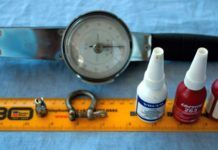
Once upon a time in Tasmania, a skipper faced a daunting task: install a three-bladed, folding propeller without hauling out the boat. The underwater job would require an adhesive to secure some of the bolts, but which adhesives that were already on board would work best under water? To find out, PS contributor Jonathan Neeves decided to run a little adhesives test of the three products he had on hand-all commonly found at chandlers worldwide under the same or a similar brand.
Bringing an Old Boat Trailer Back to Life
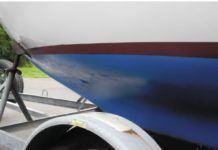
Over the years, weve stressed the importance of keeping a close eye on stainless-steel sailboat hardware and why pitting, crevice-corrosion, and galvanic action are the enemies. But we may have downplayed the need to be aware of how plain old ferrous-metal oxidation comes into the picture. Mild steel and high-carbon steel are even more prone to corrosion, and despite the fact that the oxidation is far easier to spot on these metals, this ticking timebomb somehow gets ignored.

Synthetic Decks vs. PS Testers
For this comparison of synthetic teak options, our first concern was ease of installation. The manufacturer typically carries out the hardest part-welding the panels together to achieve the correct dimensions. The ease of gluing our test panels to a simulated fiberglass deck was similar for all five test products. The difficulty of your own project will depend on how much work the manufacturer does in terms of measuring, assembling, and fitting the panels.
DIY Mast Boot
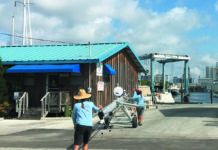
With a little imagination and some inexpensive materials, you can put together a leakproof mast boot in a few hours. 1. Roofing Rubber One reliable boot sealer is self-adhesive ethylene propylene diene monomer (EPDM), a common rubber-membrane roofing material. Sold at local building supply stores, the rubber is black in color and comes in a roll that is 5 inches wide. (Dont confuse it with ice and water shield, which is much thinner.) Peeling the plastic backing from the underside of the EPDM material exposes the sticky side. Arrange precut strips prior to permanent installation. We suggest using American-made products as the imported stuff doesn't adhere well to itself.
Painting Water Tanks
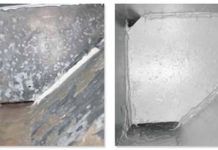
When it comes to onboard water tanks, we prefer stainless, fiberglass, and even roto-molded tanks (in that order) to aluminum ones. Aluminum tanks tend to pit and corrode over time, often needing to be replaced. The insides of the two 60-gallon aluminum water tanks in our 30-year-old Valiant 40 were more like a nasty moonscape than a drinking source. Their surfaces were pitted and rusted from what looked like a reaction to long-time use of chlorine.
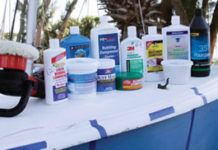
Heavy-Duty Rubbing Compounds
Gelcoat provides a fiberglass boat with a hard, water-resistant protective shell. When new, its polished and waxed to a bright shine, but after a few years of facing the elements-especially damaging UV rays-gelcoat will begin to oxidize and turn into a dull, chalky film on the surface. There are a few ways to remedy an oxidation problem (see Tips & Techniques), but for this article, we focused on coarse and medium-coarse rubbing compounds, which can be buffed on to remove the chalky layer and fine scratches. The tests evaluated ease of use, ability to remove oxidation and scratches, and whether they left swirl marks; testers also considered price, availability, and eco-friendliness.
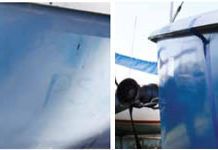
Tired Daysailer Hull Serves as Test Platform
Practical Sailor tested the compounds on the badly oxidized hull of a neglected 1974 ODay Javelin daysailer that has been stored uncovered in the Florida sun and salt air for years. Formerly the platform for gelcoat restorer and wax tests, the Javelins once dark-blue hull had degraded into a chalky, light blue mess.
Mailport: June 2013
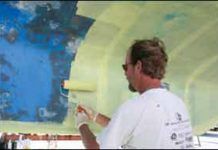
How thick is too thick for the buildup of old layers of bottom paint? This question arises because I have just finished painting the bottom of my boat. Even though I diligently sought out potential flaking spots with my knife, while rolling on the paint (Pettit Ultima Eco), I would frequently get a mess caused by the paint flaking off. I have only owned this boat for three years, so I really do not know how many layers there are.

Why This $1M+ Sailboat Might Be The Best Bluewater Cruiser in...
The Bluewater 56 is one of the most misunderstood offshore cruisers in the sailing world — and today we’re diving deep into what makes...


Latest Sailboat Review

Rethinking Sailboat Structure
When it comes to describing a sailboats most valuable attribute, its surprising how varied opinions can be. Staying afloat should be our first priority, and although you seldom read or hear much about it at boat shows, the structural elements that hold a sailboat together are an all-important consideration.